The first step is admitting you have a problem.
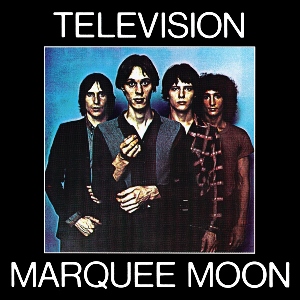
Ever since I wrote about Tom Verlaine’s passing and reflected on his extraordinary legacy, I’ve been on a full-fledged Television kick. But things resurfaced with a vengeance over the weekend when I randomly stumbled across the Rhino High Fidelity release of Marquee Moon and added it to my music collection.
Now, keep in mind: I had already put in pre-orders for the upcoming MoFi releases long before I even knew the Rhino High Fidelity edition existed. Finding the Rhino release over the weekend was just gasoline on the fire.
Now, Marquee Moon—an album with a release date of 1977 and an over ten minute title track—currently spans across multiple different shelf slots, disc cases, and digital drives in my collection. Marquee Moon isn’t just an album you like; it’s an album that takes over your entire cerebral cortex—and apparently, your entire media budget.
How Did I Get Here? (The Danger of the “Canon” Hype)
So, how does a person end up with multiple copies of one album?
It started back in the 1990s. Marquee Moon had been hovering on my radar for a while because, if you read any music journal, it is locked into every “Top 500 (or Top 100) Albums of All Time” list ever printed. And that’s the thing about the music canon—the hype trap is real. When an album is endlessly hailed as a historic, life-altering masterpiece, your expectations are set impossibly high. You sit down expecting an instant, unprecedented, earth-shattering epiphany on track one. I had the exact same reaction with The Velvet Underground & Nico. You hear about the banana cover and the legendary status for years, you finally drop the needle, and your brain goes: “Wait… this is it?”
That’s precisely what happened when I bought the ‘87 CD of Marquee Moon in the ’90s. I took it home, popped it in the player, gave it a couple of listens, and my initial reaction was… ehh, it’s okay. The weight of thirty years of critical hype made it hard to just hear the music for what it was. So I tucked it away on a shelf and completely forgot about it. Then, a few years later, when the hype had faded from my memory, I pulled that ‘87 CD back out and pressed play.
Without the burden of expectation, I was absolutely, completely floored. Whatever mental frequency required to understand Marquee Moon finally aligned, and there was no turning back. It was like hearing color for the first time. I honestly don’t know the exact moment or mechanism of how it happened, but somewhere along the line, this sleeper hit crept up from behind and became my favorite record of all time.
Over the years, I’ve recommended Marquee Moon to various guitar player friends, thinking they’d immediately find it fascinating. Every single one of them reacted with that same lukewarm “meh” I originally had. But given my own voyage with this record, I completely understand. They just haven’t hit their second listen yet. They’ll need to revisit it down the road when the hype clears, and when they do, it’ll blow their minds.
The Sound: Did Music Production Peak in the 1970s?
If you haven’t spent quality time with Tom Verlaine and Richard Lloyd’s guitar masterpiece, it’s hard to explain what makes it so dangerously addictive.
In 1977, while the rest of the New York CBGB scene was stripping rock ’n’ roll down to three distorted chords and pure, adrenaline-fueled speed, Television went in the exact opposite direction. They decided to become guitar architects.
You can’t talk about the sound of this album without mentioning the production work of Andy Johns (co-producing alongside Tom Verlaine). Andy—the younger brother of famed producer Glyn Johns—brought his pedigree from engineering Exile on Main St. and classic Led Zeppelin albums to the table. Instead of drenching the band in ’70s arena-rock reverb or harsh punk distortion, Andy Johns captured them raw, warm, dynamic, and hyper-clear.
I’m not a music producer, but if I could point to one thing wrong with modern recordings, it’s that they just don’t leave much breathing space anymore. Everything is wall-to-wall noise, crushed dynamics, and digital over-compression. But on Marquee Moon, every single instrument is heard clearly in the mix at the proper levels. Nothing is buried. Whatever magic trick they pulled off in the 1970s, it worked—Marquee Moon has an almost perfect production. That clarity gives four guys in a room the space to unleash their musicianship:
- The Interlocking Guitars: Verlaine and Lloyd don’t do the standard “rhythm vs. lead” dance. They weave together like cogs in an intricate Swiss watch.
- The Tension and Release: Take the title track, “Marquee Moon”. It coils up, builds layer upon layer of nervous energy, and then—right around the six-minute mark—Verlaine launches into a guitar solo that feels less like a rock cliché and more like watching a lightning storm slowly roll across the skyline.
- Billy Ficca (The Secret Weapon): While everyone is talking about the interlocking guitars, Billy Ficca is the absolute secret weapon of this record. Having played drums off and on for years, I have a special appreciation for what’s happening behind the kit. I remember trying to play some of Ficca’s parts, and most of it was completely out of my reach. Thinking like a standard rock drummer probably played a part in that, because Ficca plays with a fluid, jazz-like complexity that goes way beyond conventional rock drumming. If you’re not a drummer, you might not notice it, but in my opinion, he is easily one of the best rock drummers ever.
The Physical (and Digital) Manifestation of Madness
Which brings us to the full depth of my sickness. The music is one thing; the media hoarding is where the intervention usually gets called. But hey, it’s not hoarding if it’s true collecting, right?
Here is where my Marquee Moon collection currently stands, and why each copy holds a special place:
- The Vintage Digital (1987 CD): The disc that started it all for me in the ’90s. This release is historic because it was the first time the title track “Marquee Moon” was included on an LP-length format in its full 10-minute unedited glory (the original ‘77 vinyl faded early at 9:58 to fit side constraints). Because it was mastered in the 1980s long before the loudness war, it retains full dynamic range and uncompressed air—making it, currently, the best digital copy in existence.
- The Holy Grail (1977 Original First Pressing): Gifted to me by my wife—bless her tolerant soul. This is the baseline against which every other version of this album is measured. It’s the benchmark analog artifact.
- The Daily Driver (Standard Vinyl Reissue): Because I am terrified of putting a single microscopic scratch or bit of needle-wear on the 1977 original, I bought a standard reissue purely so I could drop the needle without breaking into a cold sweat.
- The Pre-Orders of Doom (MoFi 45 RPM One-Step & SACD): Long before I even knew a Rhino High Fidelity cut was coming, I had Mobile Fidelity’s flagship UltraDisc One-Step 45 RPM vinyl box set and Super Audio CD on order (at price points I am legally and morally unwilling to state in public —though I did NOT order the $3,500 MoFi turntable. Everyone has boundaries!). Once it arrives, that MoFi SACD is destined to take the crown as the definitive, ultimate digital release of this album.
- The Audiophile Impulse (Rhino High Fidelity AAA): Cut by Kevin Gray from the original analog master tapes, this is the magnificent release I stumbled across over the weekend after placing my MoFi pre-orders. I couldn’t resist it, and it restarted this entire obsession cycle.
- The Bonus Track Era (2000s Expanded Remaster): Kept on my drive so I can hear the complete, unedited “Little Johnny Jewel” and alternate studio takes on the go. Unfortunately, because this edition was remastered in the 2000s right in the thick of the loudness war, it suffers from pushed brickwalling and lost dynamic range—making it great for the archival extras, but a step down audio-wise from the ‘87 CD.
Why It Hits So Hard (Connecting the Dots)
While working on this post, it finally hit me why this album strikes the right chord so deeply for me. Before I ever discovered R.E.M., college radio, or alternative music in the ’80s and ’90s, I was heavily into ’60s garage rock and Bob Dylan. And Marquee Moon turned out to be the exact architectural bridge between those two worlds. They bridge the raw, wild energy of ’60s garage rock, art-rock, and psychedelia—think of the ferocious fuzz-stomp of The Sonics, the street-poet art-rock of The Velvet Underground, or the mind-expanding, unhinged guitar explorations of The 13th Floor Elevators—and connect it directly to ’80s indie/college rock (like R.E.M., Hüsker Dü, and The Pixies) alongside the literate, poetic lyricism of Bob Dylan and Lou Reed. You can draw a straight line from Verlaine’s literate, surreal lyrics and chiming, razor-sharp tone straight into the DNA of early R.E.M., Sonic Youth, The Strokes, and every indie rock band that ever dared to pick up a Fender Stratocaster or Jazzmaster. It’s raw without being messy. It’s virtuosic without being self-indulgent. It’s precise, poetic, and utterly timeless.
So yes, the first step is admitting you have a problem. The second step is accepting that you will soon own multiple different versions of your favorite record of all time, cranking the volume to ten, and listening to Marquee Moon on repeat for the foreseeable future—and hoping you put in your pre-order soon enough to be one of the lucky 3,000 people on Earth who will actually get to own those MoFi releases.